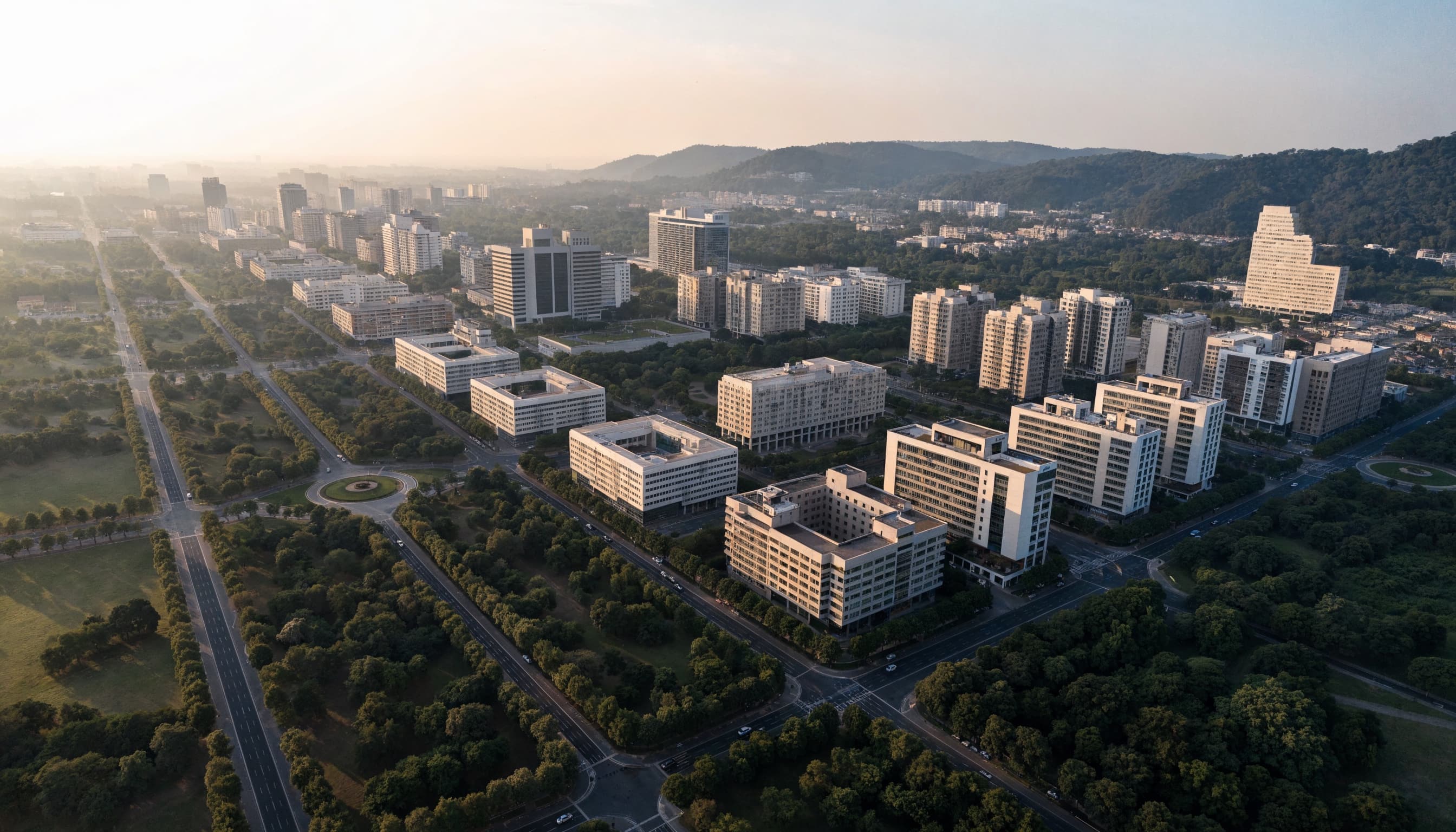
Why Islamabad became the centre of gravity for Pakistani real estate
Planned from nothing in the 1960s, Islamabad now sets the standard for how property gets built in Pakistan. What changed, and what it means for buyers.
Most cities grow outward from something old. Islamabad did not. It was drawn on paper in the early 1960s, laid out on a grid of lettered sectors, and built into the space between the Margalla Hills and the Potohar plateau. That origin still shapes it, and it is the single reason the city behaves differently from Karachi or Lahore when it comes to property.
Planning came first, and it stuck
Because the sectors were set out before the buildings, Islamabad inherited something most Pakistani cities have had to retrofit: predictable road widths, defined commercial zones, green belts that were reserved rather than left over. A buyer looking at a plot in a planned sector can see what will be built around it, because that was decided in advance.
That predictability is worth money. It is why approved schemes hold value more steadily here, and why the question a serious buyer asks first is not what the building looks like but who approved the layout it sits on.
The expressway changed the geography
For years the desirable addresses were the central sectors, and everything else was a compromise. The Islamabad Expressway rewrote that. A corridor running south east from Zero Point put large tracts of land within a predictable drive of the centre, and the communities that grew along it stopped being suburbs in the apologetic sense.
Gulberg Greens is one of those. From its entrance on the Expressway, Zero Point is about twelve minutes and Rawalpindi Saddar about fifteen. That is not a compromise on location. It is a different way of buying the same access.
Twin cities, one market
Islamabad and Rawalpindi function as a single property market with two characters. Rawalpindi carries the older commercial density and the commerce that comes with it. Islamabad carries the planning discipline and the institutional tenants. The corridor between them, where the Expressway runs, is where those two things meet, and where mixed use development makes the most sense.
A building that holds retail, offices and homes only works where all three have a reason to be there. The twin cities corridor is one of the few places in Pakistan where that is straightforwardly true.
What it means if you are buying
The lesson of Islamabad's forty years is not that any plot appreciates. It is that approved, planned, serviced land behaves differently from land that is none of those things. Before anything else, three questions are worth more than any brochure.
- Who approved the layout, and is the no objection certificate on record with the authority
- Is the infrastructure built, or promised: roads laid, power and gas connected, security operating
- Is there an existing population, or would you be the one arriving first
A community that answers all three has already absorbed the risk that early buyers usually carry. That is the difference between buying into a plan and buying into a place.
- Islamabad
- Market
Keep reading
Gulberg Greens: what nearly two decades of building actually produced
A CDA approved community by IBECHS on the Islamabad Expressway, launched in 2007 across about 16,934 kanals. What is there now, and why maturity matters.

CDA approval and NOC: what they mean, and what they do not
The two words every Islamabad property advertisement uses. What CDA approval and a no objection certificate actually cover, and the questions to ask instead.